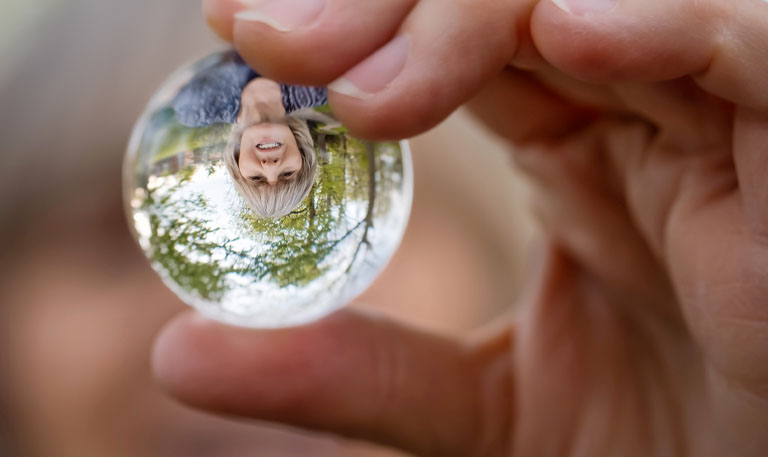


Several years ago I walked into a busy Starbucks and joined the line. When my turn came, I placed my order with the cute teenage barista who was much more interested in the equally cute high school girl who had ordered before me. I’d like to think what happened next was due to that fact, but after standing to the side for several minutes awaiting my drink, the young man glanced over at me and said, “What can I get you ma’am?” It was bad enough that he had called me “ma’am,” but I was floored to think that he had no recollection of taking my order. This was my first experience of feeling invisible but certainly not the last.
Most of us can create a litany of reasons why we aren’t always happy about aging—achy joints, sagging faces and bodies, suffering incontinence and insomnia, and just feeling weary of the world sometimes. Though never the homecoming queen, I have garnered my share of backward glances over the years. So, it was shattering to realize that aging could also mean I would become invisible.
But as time passes I have begun to consider invisibility an asset and even, I dare say, a super power. Imagine, we have been gifted an invisibility cloak that allows us to move about in the world any way we please. It frees us up to wear what we want, say what we want, and be who we want because no one is really paying attention. In her book, Big Magic, Elizabeth Gilbert writes about a wise, older woman telling her: “We all spend our twenties and thirties trying so hard to be perfect, because we’re so worried about what people will think of us. Then we get into our forties and fifties, and we finally start to be free, because we decide that we don’t give a damn what anyone thinks of us. But you won’t be completely free until you reach your sixties and seventies, when you finally realize this liberating truth—nobody was ever thinking about you, anyhow.”
Held in the right perspective, this invisibility thing can be very empowering. In the end, the best we can do is practice acceptance. I said this to my dermatologist recently who wistfully asked, “Can you evangelize that?” Easier said than done. Acceptance is the counterpart of grace and as a lover of that particular word, that’s what I’m striving for. I have realized that most people will experience feeling invisible at some point. While we can’t control how or if others see us, we can take the initiative to see and acknowledge others. We just might make their day!
After losing her husband in 2021, Marilee Clarke began writing her book on navigating grief. Excerpts from the book (still in progress) often appear in this magazine. Her passions include mixed media creations and traveling the world every chance she gets. She currently splits her time between Issaquah and the California desert, enjoying the best of two very different and beautiful locales.