https://3rdactmagazine.com/things-left-unsaid/aging/aging-artfully/The Buddhist concept of ”no-self” offers a radical perspective on identity that can be liberating and open pathways toward greater ease and happiness with the process of growing old.
When the roles and achievements that once defined us—career, parenthood, physical vitality—transform, fade or disappear, we often feel disoriented and bereft. Without defining identities, our sense of self is eroded and we flounder. But loss of self can also be an opportunity to discover a deeper, more fluid mode of being.
I have experienced a number of crises of identity as I have aged. I was 50 when my 20-year career with PBS came to an end. I did not handle this transition well. To my surprise, my sense of self-worth was intimately tied to my professional status. The loss of a career identity, and the year-long search for another job, eroded my confidence and thrust me into a deep depression. I eventually landed another job with AARP and regained my confidence. But I realized that my sense of self needed some adjustments.
My sense of identity continues to be tested as I age.
I’m acutely aware that physical changes have forced me to abandon or dramatically curtail a number of cherished identities. Over the years, I’ve prided myself in my use of my body, as an athlete, a dancer, a performer, a slapstick comedian, a musician. But, two Achilles surgeries, arthritis pain, bouts of trigger finger, and degeneration in my lower spine have forced me to abandon or seriously curtail those activities.
I’ve handled those late-life transitions more effectively than I did during my period of unemployment. I learned that those activities did not “define” me and their loss did not diminish my value as a human being. The cliche that when one door closes, another opens, proved true. I’ve been able to replace younger pursuits with new areas of passion. I’ve started painting, for example, and producing podcasts.
So, one effective strategy for coping with disruptions to my sense of self has been to cultivate new identities. I’ve replaced obsolete identities with new ones, better suited to my current reality. I’m no longer an athlete, I am now a painter. I’m no longer a stage performer, I’ve become a podcast performer.
There is another strategy that I have been exploring, one that takes a radically different approach to the challenge. Rather than focus on reinventing myself, I’ve begun to question whether a strong self is necessary at all. Will a strong sense of self actually help me to flourish as I age or will it be a hindrance? I’m beginning to believe that old age will be easier and more enjoyable if I abandon any attachment to self at all and simply learn to be.
As many of you will recognize, my thinking has been highly influenced by contemplative philosophies, particularly Buddhism and Zen, that promote the idea of no-self. I can’t possibly do justice to the philosophy of no-self in this short essay, but I can highlight a couple of points that make a great deal of sense to me. When the Buddhists make mysterious claims that the self is an illusion, I think they are suggesting that our concepts of self are illusory.
Concepts are fabrications of our mind that attempt to describe and reify one aspect of who we were at some time in the past. Fixed ideas of self cannot possibly capture the complexity and fluidity of our full being. Our true self (if “true” is the right word) only emerges in the moment.
When we appreciate this insight, we pay less attention to thoughts that tend to distort reality and pay deeper attention to what is really happening, which is often quite miraculous and wonderful. Yes, my back hurts and the world has gone crazy, but I am alive, the sun is warm on my face, my grandchildren greet me with hugs.
I also find it helpful to describe the Buddhist philosophy as “no-EGO” rather than “no-self.” The encouragement to let go of the self suggest that we will be happier and better people if we escape our own egocentric self-interests. When we hold too tightly to fixed identities, our view of the world becomes myopic, woefully incomplete and, therefore, distorted.
The exploration of no-self can lead to a radical reorientation of mental priorities. By clearing away mental clutter it offers better access to direct experience. When I stop relying on restrictive concepts of self, I can begin to interact more honestly with who I am right now, for better or worse.
When I can free myself from ideas about how old age should be, I give myself the opportunity to let old age reveal itself as it actually is. The concept of no-self encourages a humility that connects me more deeply to the fundamental currents of life. I recognize more clearly the dynamic truth that my life is part of an endless process of transformation that cycles through birth, growth, decay, death, decomposition, and then renewal.
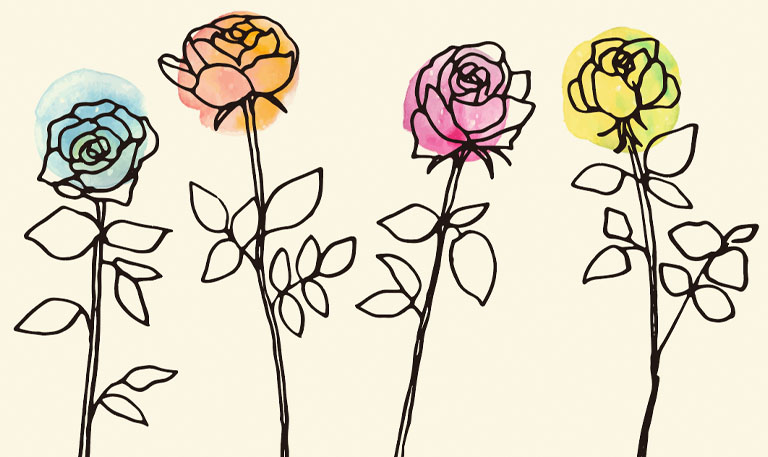
This insight isn’t about my achieving some exalted spiritual state—it’s about stripping away illusions and mental constructs to reveal a deeper truth. To name a rose is to know only the concept of a rose. But, to really know a rose we need to discard labels and assumptions and simply open ourselves to the unique experience of a single blossom. And, in that blossom the wonder of life is revealed.
English philosopher Douglas Harding has expressed the idea this way:
“As something, I am merely that thing. As no-thing, I am all things.”
The gift of this reframed perspective is the ease it brings to daily living. I can spend less energy resisting what should be and more time relaxing into an intimate relationship with what is. The simple act of smelling a rose can deepen my connection to the fullness of life’s great unfolding. And through that connection I can find greater peace with the aging process and gratitude for the chance to experience this gift of life.
Michael C. Patterson had an early career in the theater, then worked at PBS, developing programs and systems to support the educational mission of public television. Patterson ran the Staying Sharp brain health program for AARP, then founded MINDRAMP to continue to promote physical well-being and mental flourishing for older adults. He currently explores these topics on his MINDRAMP Podcast and his Synapse newsletter. His website is www.mindramp.org.